ServicesWindshield Protection Film
Windshield Protection Film in Carmichael
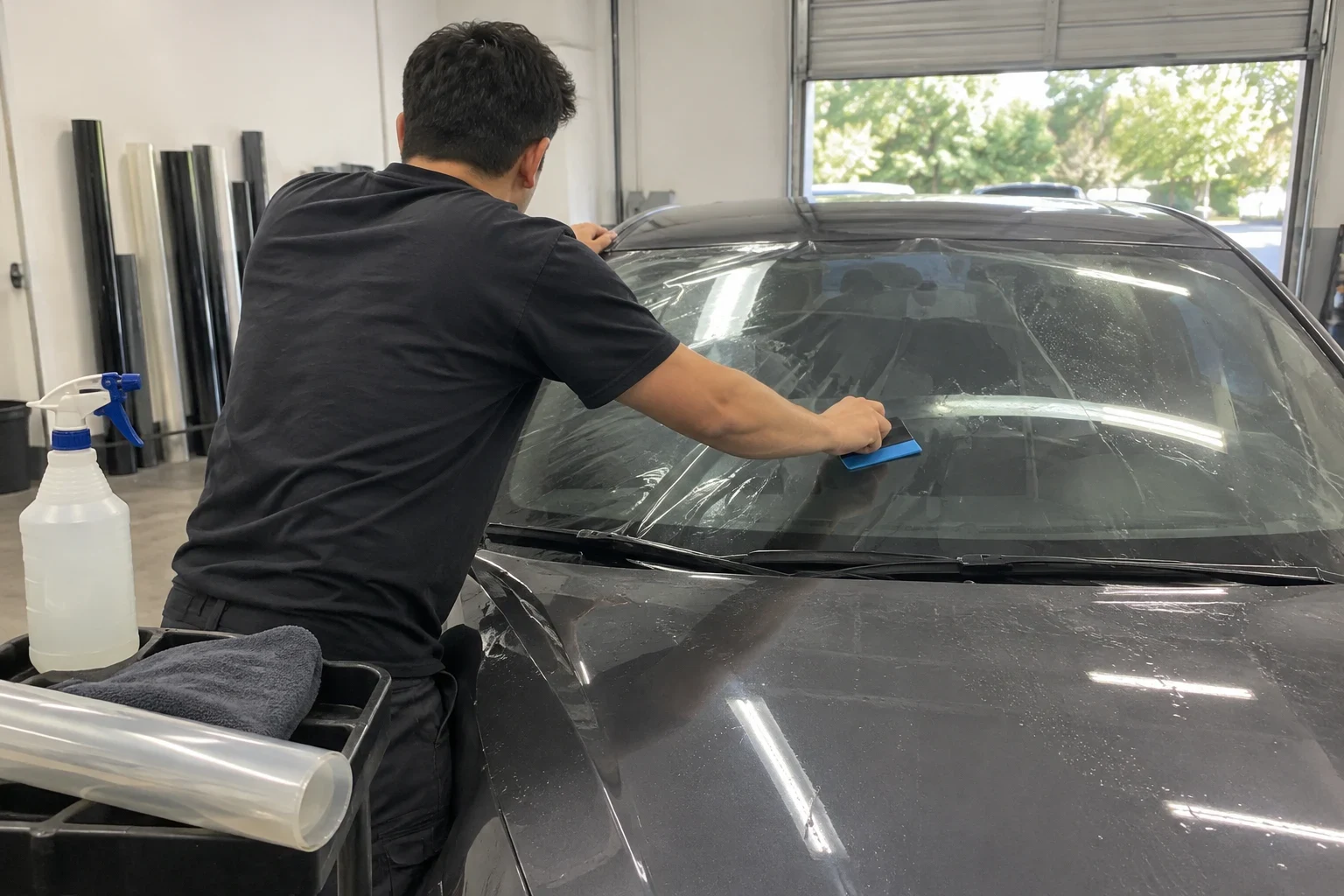
Windshield protection film is a thin, clear layer we install on the outside of your glass. It takes the small rock hits and sand pitting that chip and crack windshields. You see through it like bare glass, and when it wears out, we peel it off and lay new film.
What the film does and what it doesn't
The film is a clear, tough layer that sticks to the outside of the windshield. When a pebble comes off a truck tire, the film absorbs much of that impact and spreads it out. A small chip that would have dug into the glass often ends up as a scuff on the film instead. It also takes the slow sandblasting from road grit that leaves glass hazy and full of glare at night.
Here is the straight answer. Film does not make a windshield unbreakable. A big rock at freeway speed can still crack the glass. What you get is fewer chips, fewer cracks that start from chips, and glass that stays clear longer.
It makes the most sense on newer cars with costly windshields, cars with cameras and sensors behind the glass, and anyone who puts a lot of highway miles on. A lot of our customers pair it with paint protection film on the hood and bumper, since the same rocks hit both.
What's included in the install
Glass inspection first
We look over the whole windshield before anything goes on. If there is a chip or a crack, we point it out and show you. Film over damage can trap dirt and hide a crack that keeps growing.
Deep cleaning of the glass
We clean the outside of the glass and clay it to pull off grit that's stuck in the surface. Any speck left under the film shows up as a bump, so this step takes time.
Film shaped to your windshield
Windshields curve in two directions. We heat-form the film so it lies flat across the curve without lifting at the edges.
Trim around cameras and sensors
We check where your lane-keep camera and rain sensor sit and plan the trim around them. We talk through that layout with you before we start.
Care instructions at pickup
The film needs some time to cure. We tell you how long to wait before running wipers hard or washing the car, and how to care for it after that.
Signs your car could use windshield film
- You keep getting chips
- If you've had chips filled more than once, your driving puts the glass in the line of fire. Film takes those hits instead.
- Glare and haze at night
- Oncoming headlights scatter across tiny pits in worn glass. If night driving feels harder than it used to, the glass may be sandblasted. Film won't fix old pits, but it keeps new ones off fresh glass.
- A new windshield just went in
- Right after a replacement is the best time. The glass is clean and undamaged, and you can keep it that way.
- Your windshield has cameras behind it
- Driver-assist cameras often mean a pricier windshield and a recalibration after replacement. Keeping the glass intact avoids both.
- Lots of freeway miles
- Long commutes on I-80 or Highway 50 behind gravel trucks and work trailers mean a steady rain of small stones. That's exactly what the film is made for.
How the day goes
- 1
Quote by phone
Call and tell us the year, make and model, and whether the glass has any chips. We give you a quote and book a drop-off time at our shop.
- 2
Drop off and inspect
You bring the car in. We go over the windshield with you and flag any damage before we start.
- 3
Clean, fit and install
We prep the glass, shape the film to the curve, lay it on and squeegee out the water and air. Then we trim the edges and the sensor area.
- 4
Final check and pickup
We look over the film in good light for bubbles, dust and lifted edges. When you pick up, we walk you through cure time and care.
What moves the price
Every windshield is a little different, so we quote by phone after we know the car. The price comes down to the glass, the film and how much prep it needs. We give you one number for the job before you drop the car off.
- Size and curve of the windshield
- A large, steeply curved windshield takes more film and more shaping time than a small, flat one. Trucks and some SUVs fall on the bigger end.
- Film choice
- Films differ in thickness, clarity and how well they shed water. We explain the options in plain terms and tell you which one fits how you drive.
- Sensors and camera areas
- More hardware behind the glass means more careful trimming. Some cars have a camera, a rain sensor and a heated wiper area to work around.
- Removing old film
- If worn film is already on the glass, it has to come off cleanly along with all the adhesive before new film goes on. That adds time to the job.
Windshield film questions
- Will the film stop every crack?
- No. It cuts down on chips and the cracks that start from them, but a large rock at speed can still break the glass. We'd rather tell you that now than have you find out on the freeway.
- Can I see through it at night?
- Yes. The film is optically clear and you look through it the same as bare glass. Once it's cured, most people forget it's there.
- How long does the film last?
- It's a wear item. It takes the hits so the glass doesn't, and over time it collects scuffs and wiper wear. How long it lasts depends on your miles and the film you pick, and when it's worn, we remove it and install new film.
- Can you put it over a chipped windshield?
- We don't recommend it. Film over a chip can trap dirt and hide a crack that keeps spreading. Get the chip repaired at a glass shop first, then bring the car to us.
- Will it interfere with my lane-keep camera?
- The film is clear, and we plan the trim around the camera and sensor area before we start. If you have a specific concern about your car's system, ask when you call and we'll go through it with you.
- Can I use the wipers and go through a car wash?
- Yes, once the film has cured. We'll tell you how long to wait at pickup. After that, normal wipers and washes are fine, though fresh wiper blades are easier on the film.
Keep the rocks off your glass
Tell us your car and how you drive, and we'll tell you what film fits and what it costs. Drop it at our shop and we'll handle the rest.